
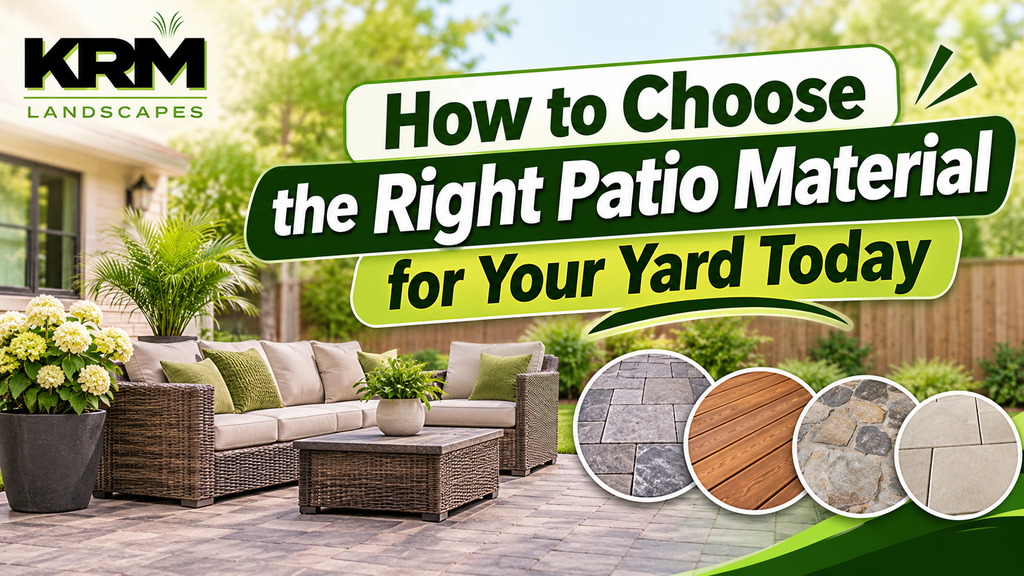
A patio is only as good as the surface underfoot. The material you choose decides how the space looks, how it holds up through winter, how much maintenance it needs, and whether you can build it yourself or need a crew. Two patios of the same size can behave completely differently after five years based on nothing but the base preparation and the material chosen. Getting this decision right the first time saves a rebuild later.
We will look at the main patio materials available, what each one does well, where each one falls short, and how to match a surface to your home and the way you actually use the yard.
Start With How the Patio Will Be Used
Before comparing materials, figure out what the patio needs to do. A seating area for two people has different demands than a space that hosts twenty for dinner.
Traffic and Furniture Loads
Heavy use means heavy furniture, frequent movement, and grills being dragged across the surface. Materials that shift under load or scratch easily will show wear fast. Pavers, brick, and natural stone handle this well. Gravel does not work under rolling loads.
Entertaining and Cooking
Outdoor kitchens and grills need a stable, level surface with good heat resistance. Grease and food spills need to be cleaned up easily. Materials with smooth surfaces and tight joints win here.
Style of the Home
A modern home pairs well with large-format pavers or cut bluestone. Traditional or colonial architecture suits brick. Cottage styles fit flagstone and rustic stone. Material that clashes with the house never looks right, no matter how good it is on its own.
Concrete Pavers
Concrete pavers are the most popular choice for good reason. They offer the widest range of colors, shapes, and textures, and they cost less than natural stone.
Strengths
Pavers handle freeze-thaw cycles well when installed over a properly compacted base. Individual units can be replaced if one cracks or stains. The uniform shapes make them easier to install than irregular stone, and they can mimic the look of brick, stone, or tile at a lower price.
Weaknesses
They can fade without sealing. Poor base preparation causes shifting and uneven surfaces, which is the most common failure point. The material itself is durable, but the installation determines how long it lasts.
Brick
Brick brings a classic look that suits traditional architecture. Clay brick retains color better than concrete and holds up well over decades.
Strengths
Brick is strong and resists fading. It can be reused or repurposed if the layout changes. Herringbone and running bond patterns add visual interest and structural stability.
Weaknesses
Color options are limited compared with pavers. Installation is labor-intensive and costs more. Joints may need sand replenishment or weeding over time. Mortared brick patios need a concrete base, which pushes the cost higher and makes them less suitable for cold climates where freeze-thaw damages mortar.
Flagstone
Flagstone offers natural variation that no manufactured product can copy. Irregular shapes and earthy colors create an organic look that blends into the landscape.
Strengths
Every piece is unique. The cleft surface is naturally slip-resistant even when wet. It works well for informal patios, garden paths, and spaces with planting between stones.
Weaknesses
The irregular shapes require more labor because each stone must be individually leveled. It needs a solid base and occasional joint maintenance. The cost per square foot is typically higher than pavers.
Natural Stone
Cut natural stone, including bluestone, granite, and travertine, offers a high-end appearance and long lifespan.
Strengths
Dense stones like bluestone and granite resist flaking in freezing weather and are less likely to grow slippery moss. Cut stone creates a formal, smooth surface with tight joints. It boosts curb appeal and holds value well.
Weaknesses
It is the most expensive option upfront. Installation requires experience with grading and base work, and the weight demands strong sub-base support. Soft stones like limestone and sandstone work in warm, dry climates but not in cold, wet ones.
Gravel
Gravel is the budget option and the easiest to install. It suits informal, natural-looking patios and irregular shapes that would be difficult with rigid materials.
Strengths
Gravel is affordable and drains well, so water does not pool. It handles curves and free-form layouts better than any rigid material. Pea gravel creates a relaxed, beach-like feel. Installation is manageable as a DIY project using the sandbox method.
Weaknesses
Gravel needs edging to stay in place. It migrates into surrounding areas without a border. Furniture legs sink into it, so tables and chairs need broad feet or a solid surface underneath. Raking is required to keep it level.
Pouring Concrete
Poured concrete is the simplest option, and it can be finished with stamps, stains, or exposed aggregate to mimic other materials.
Strengths
Poured concrete creates a seamless surface with no joints to maintain. It is durable and relatively affordable for large areas. Stamped and tinted concrete can mimic the look of slate or stone at a fraction of the cost.
Weaknesses
Concrete cracks, especially when site preparation and drainage are not handled correctly. It cannot be repaired as easily as pavers because cracks spread and patches show. Pouring requires professional experience because the material begins to harden the moment water is added.
Base Preparation Matters More Than Material
No material performs well over a poor base. This is the single most important factor in how a patio holds up.
Excavation and Compaction
The area needs to be excavated to the right depth and compacted in layers. A plate compactor is required for most installations. A loose base causes settling, shifting, and uneven surfaces regardless of the material on top.
Drainage and Slope
Water needs somewhere to go. The surface should slope away from the house at roughly two percent. Proper grading and permeable base materials prevent pooling and freeze damage. Skipping this step causes heaving, cracking, and ice patches in winter.
Final Thoughts
The right patio material depends on how the space will be used, how the house looks, and what the climate demands. Pavers offer the best balance of cost, durability, and design flexibility for most homes. Brick suits traditional architecture and holds color well. Flagstone and natural stone deliver appearance and longevity for homeowners willing to pay for them. Gravel keeps costs low and handles irregular shapes. Whatever the choice, the base preparation decides whether the patio lasts five years or thirty. Spend the time and money on what goes underneath.
FAQs
1. What is the most durable patio material?
Natural stone and concrete pavers are both highly durable when installed over a proper base. Dense stones like bluestone and granite resist freeze-thaw damage better than softer materials. Installation quality matters more than the material itself.
2. Can I install a patio myself?
Gravel patios are the most DIY-friendly option and require minimal digging. Precast concrete slabs and pavers can be installed by confident homeowners with a plate compactor and patience. Poured concrete and irregular flagstone are best left to professionals.
3. How thick should the base be under a patio?
Most patios need four to six inches of compacted gravel base, applied in layers and compacted between each one. The exact depth depends on the material and the soil conditions. In cold climates, the base must extend below the frost line.
4. Which patio material is best for cold climates?
Concrete pavers and dense natural stone such as bluestone and granite handle freeze-thaw cycles well. Mortared brick and porous stone struggle in cold climates because water freezes in the joints and cracks the surface.
5. Does a patio need to be sealed?
Concrete pavers benefit from sealing to prevent fading and staining. Natural stone may need sealing depending on the type. Brick and gravel generally do not require sealing. Sealing extends lifespan but adds a maintenance step every few years.